 Editorial
Development Lies Beneath Our Feet
Andrés Rebolledo Smitmans
Executive Secretary · OLACDE
Latin America and the Caribbean facing a new stage of investment, infrastructure, energy transition and mining development.
START ↓EditorialAndrés Rebolledo Smitmans
Executive Secretary · OLACDE
 Prologue
Gastón Siroit
Director, OEMLAC · OLACDE
The energy transition is making minerals strategic, but having them is not enough. The regional opportunity depends on turning resources into projects, infrastructure, competitive energy and execution capacity.
The global energy transition is increasing demand for critical minerals associated with renewable energy, electric mobility, energy storage and new technology industries. In this context, mining has become strategic for energy security and industrial competitiveness. Latin America and the Caribbean starts from a privileged position: it holds around 60% of global lithium reserves and more than 30% of global copper reserves, in addition to significant resources of silver, nickel, graphite and rare earths.
However, geological resources alone no longer guarantee the development of new projects. International competition to attract investment requires infrastructure, sustainability, regulatory stability and access to competitive energy. Mining already accounts for around 9% of LAC electricity demand, and its consumption could increase by 62% by 2034. Generation plants, transmission lines and mining megaprojects share long development horizons; when they advance without coordination, costs, risks and timelines increase. This chapter therefore establishes a premise from the outset: mining, energy and infrastructure must be planned in an integrated manner.
The White Paper is organized around a central question: what energy conditions are needed to transform Latin America and the Caribbean’s mining potential into competitive, sustainable projects capable of contributing to the energy transition? The answer connects mineral resources, energy demand, infrastructure, technology and the perspectives of decision-makers.
The sequence begins with the strategic context and moves through the next generation of projects, the energy planning required to supply them, real-world corporate and technology experiences, the perspectives of authorities and industry, and finally a regional roadmap. The objective is to move from diagnosis to execution: to understand where investment will take place, how much energy projects will consume, what infrastructure they will require and which conditions can accelerate their materialization. The core idea is that twenty-first-century mining competitiveness no longer depends on geology alone, but also on the ability to anticipate and coordinate energy and infrastructure.

The abundance of mineral resources creates an exceptional opportunity for Latin America and the Caribbean, but development does not automatically follow from geology. Turning that endowment into investment, infrastructure, jobs and productive capabilities requires institutions, planning, competitive energy, technology and a long-term territorial perspective.
The challenge is to move from resource availability to a development platform capable of capturing more value, strengthening suppliers and connecting mining, energy and infrastructure. The energy transition expands the opportunity, but it also raises the bar for sustainability, traceability and execution capacity.

Critical minerals are no longer merely industrial inputs. Electrification, grids, storage and digitalization have turned them into strategic assets for energy, industrial and technological security. The concentration of extraction—and especially processing and refining—in a limited number of countries has made diversification of global supply chains a priority.
LAC already has a significant presence in several markets: close to 40% of global copper production, around 25% of lithium, more than 50% of silver, over 90% of niobium and approximately 40% of molybdenum. However, this production strength is not matched to the same extent in refining and transformation. The document indicates that the region accounts for approximately 26% of global copper refining, 10% of cobalt refining and 7% of rare-earth refining. This gap creates an opportunity to capture more value, strengthen suppliers and technological capabilities, and contribute to more diversified global supply chains.
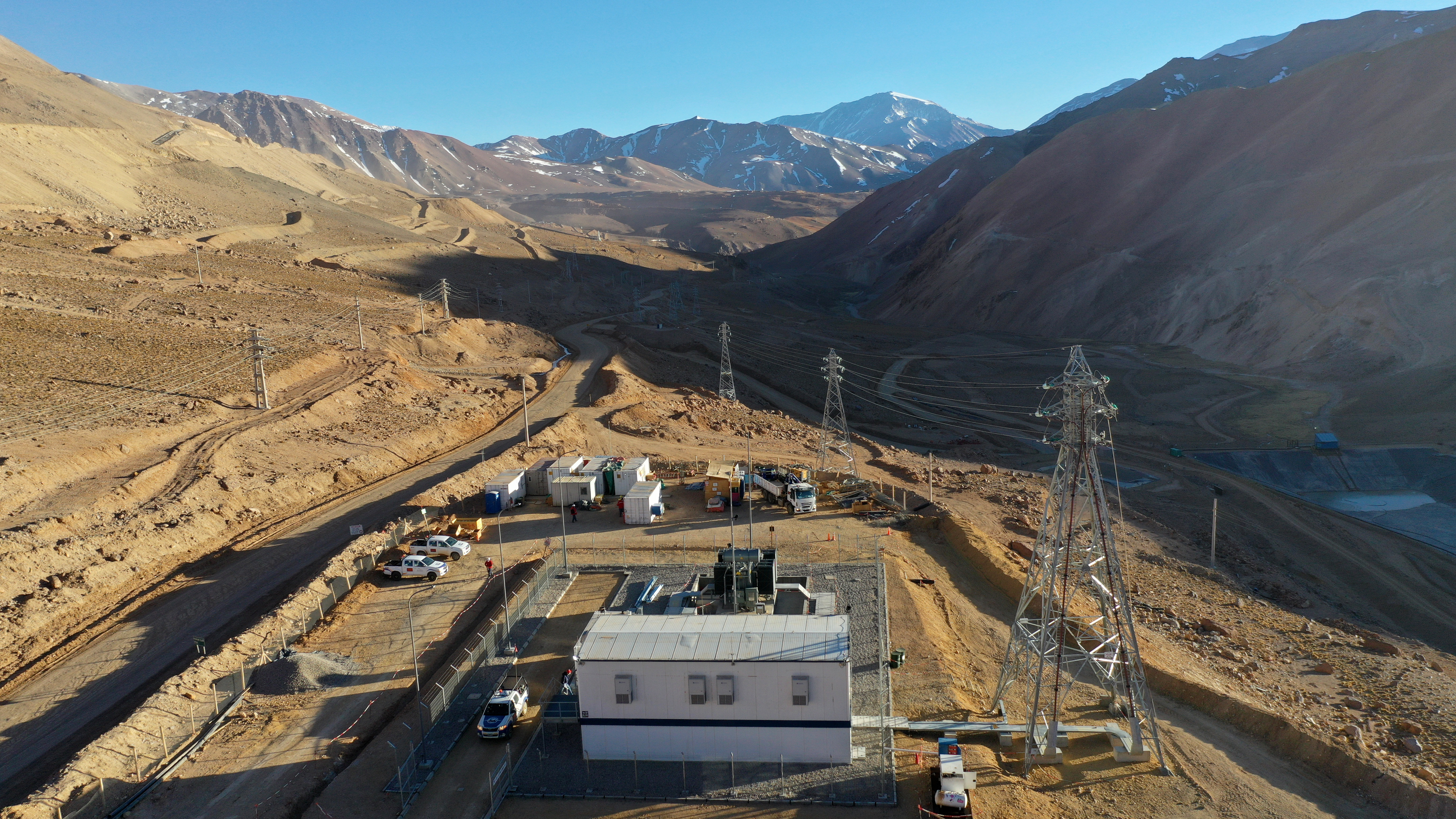
Energy is not only an enabling condition for a mining project; it is also a determinant of competitiveness, sustainability and value creation. Countries able to provide secure, affordable and increasingly clean energy are better positioned to attract investment, sustain industrial growth and develop infrastructure. The advantage lies not simply in possessing energy resources, but in converting them into reliable, resilient and economically productive systems.
Capital is increasingly directed toward markets perceived as lower-risk and more capable of execution. For LAC, competitive, low-emission electricity must therefore be combined with grids, institutions, capabilities, financing and innovation. The conclusion is fundamental: mining competitiveness cannot be analyzed separately from energy planning.

The final section of the chapter provides the bridge to the project pipeline. Its purpose is to identify Latin America and the Caribbean’s comparative advantages in consolidating its position as a strategic destination for critical-mineral investment, as well as the challenges the region must overcome to capture that opportunity. The region has the resources and a relevant position in global markets, but future leadership will depend on execution capacity: turning natural advantages into competitive, bankable projects connected to the infrastructure and energy systems they will need to operate.
The challenge is not only to identify resources, but to know which projects can materialize, where they will be located and what infrastructure they will require.
Latin America and the Caribbean has one of the world’s largest mining project pipelines, driven by growing demand for critical minerals and by the opportunity to consolidate its role as a strategic supplier to the energy transition. The document emphasizes that the real challenge is no longer simply to develop new deposits, but to turn regional potential into competitive, bankable and executable projects.
Understanding where the next investments will be located, which minerals will lead growth and what their requirements will be is the starting point for anticipating infrastructure and energy demand. The chapter uses a portfolio of projects with formal development studies—from scoping and Preliminary Economic Assessment (PEA) through prefeasibility, feasibility and construction—to gauge the scale of the regional pipeline. This approach distinguishes geological resources from projects at different stages of maturity and, therefore, with different probabilities and timelines for materialization.

The portfolio shows that copper is the main driver of the next wave of regional mining investment. In the universe considered by Plusmining, it accounts for around 70% of initial CAPEX, with strong concentration in Chile, Peru and Argentina. Argentina also stands out for lithium, Brazil for iron ore, and Mexico for a more diversified portfolio spanning copper, gold and silver.
This structure reinforces the importance of viewing mining not as a homogeneous block but as a combination of minerals, territories and development models. Each commodity entails different demand, processing, logistics and infrastructure profiles. The Andean location of a large share of investment—Antofagasta, Atacama and Tarapacá in Chile; San Juan and Salta in Argentina; and Apurímac, Cajamarca and Arequipa in Peru—also indicates where new electricity loads and infrastructure needs will be concentrated over the next decade.

Under the approach used in the White Paper, 338 copper, gold, silver, zinc, lead, lithium, iron ore and rare-earth initiatives are identified, with expected initial CAPEX of approximately US$329 billion. Investment is highly concentrated: Chile, Argentina and Peru account for close to 83% of the total, while Chile alone represents approximately 45%.
The portfolio also reveals differences in maturity. Chile has a predominantly brownfield structure, while Argentina has a much higher proportion of greenfield projects. In terms of timing, more than three quarters of CAPEX is scheduled from 2030 onward; the post-2034 block represents around US$117 billion. Within that group, the weight of projects at prefeasibility, PEA and scoping stages increases, meaning that a significant share of investment still depends on technical progress, permitting, financing and final investment decisions. The document also identifies 44 megaprojects with CAPEX above US$1.5 billion and projected start-up during the next decade.
Resources and a large project pipeline do not guarantee that investment will materialize. Between geological potential and commercial production lies an architecture of enabling conditions that determines how predictable, competitive and attractive a jurisdiction is for long-term capital.
Beyond the technical challenges of each operation, the macroeconomic environment, regulatory stability, infrastructure, access to energy, financing, institutional capabilities and territorial and social management all matter. Mining competitiveness therefore depends on reducing uncertainty and building the conditions needed to turn potential projects into executable investments.
Anticipating where, when and how much mining demand will grow makes it possible to guide generation, transmission and infrastructure before projects begin operations.
The expansion of new mining projects is redefining where and when energy infrastructure will be needed. Mining currently represents around 9% of regional electricity demand. OLACDE projections estimate growth from 124,524 GWh in 2024 to 201,590 GWh in 2034: a cumulative increase of 62%, equivalent to nearly 77 additional TWh in one decade.
Growth will vary considerably across countries. Argentina shows the largest relative increase, with projected expansion of 425%, mainly associated with new lithium and copper projects; Guyana reaches 205% and Peru 86%. Planning cannot focus on percentages alone: it must simultaneously consider growth rates, absolute volumes and the territorial location of loads. OLACDE’s model integrates national energy balances, official expansion plans, macroeconomic projections and the mining portfolio to turn demand into a forward-looking planning input.

The expansion of generation and transmission is an enabling condition for reliable, competitive and timely electricity supply. Infrastructure availability affects numerous projects from early stages, particularly in territories where mineral resources and renewable potential are far from major consumption centers.
AFD’s contribution emphasizes that strengthening high-voltage grids can connect demand centers with new renewable generation, better absorb variability and support the development of strategic sectors. Energy infrastructure must be planned together with other factors—water, roads, ports and institutional capabilities—because mismatches among these dimensions can lead to delays, cost overruns or growth constraints. The lesson is to plan before investing, so that infrastructure supports mining development rather than emerging later as a limitation.

Mining and the power sector share long-term investment horizons, large capital requirements and the same geography, but historically they have operated through separate institutions and schedules. Lack of coordination creates direct risks: the location, timeline, scale and required power of new projects are essential information for sizing generation and transmission; in turn, firm power and competitive tariffs affect mining profitability.
The White Paper proposes a continuous cycle: mining portfolio → demand projection → energy scenarios → gap identification → generation and transmission expansion → commissioning → scenario updates. Chile and Peru provide concrete coordination mechanisms. In Chile, Cochilco projections feed transmission-planning processes; in Peru, the mining portfolio is incorporated into COES’s Transmission Plan. The objective is not to impose a single institutional model, but to ensure that information circulates in time.
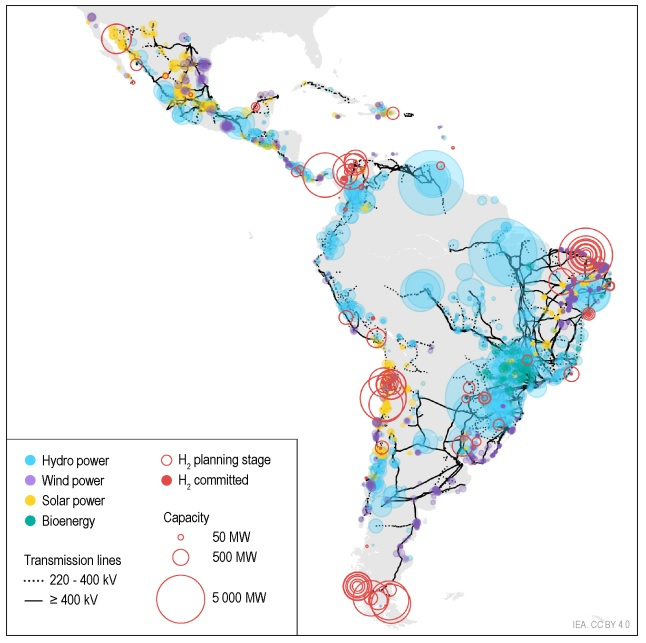
The infrastructure required by new mining hubs goes beyond electricity. Roads, railways, ports, water, telecommunications and industrial services are all part of technical and economic viability. Many deposits are located far from urban and industrial centers, so shared infrastructure and public-private coordination can generate economies of scale and reduce costs.
The White Paper also compares reference electricity demand and connection challenges for major copper projects. Nueva Centinela considers 110.6 MW for the concentrator plus pumping and port loads; Mirador Phase II approaches 185 MW by 2034; Collahuasi reaches 288–338 MW of peak demand; Cerro Verde projects 600 MW for future operations; Tía María requires around 83 MW; and Vicuña Phase I estimates 220 MW in operation and 260 MW peak. These scales show why transmission, substations and electricity corridors must be anticipated before mine construction.

PPAs, self-generation, interconnections, electrification, process redesign, water and territorial reconversion illustrate different transformation pathways.
Electricity supply has evolved from an operational decision into part of mining competitiveness and decarbonization strategy. The chapter brings together different models: long-term renewable PPAs, self-generation, new wind and solar capacity, cross-border interconnections and off-grid solutions with storage.
BHP replaced contracts associated with fossil generation at Escondida and Spence with renewable agreements; Vale reached 100% renewable electricity consumption in its Brazilian operations in 2023, while Sol do Cerrado can cover around 16% of its electricity consumption in Brazil; Quellaveco linked its approximately 187 MW demand to the development of Punta Lomitas; Veladero connected to Chile to replace part of its diesel-based self-generation; Quebrada Blanca completed its transition to 100% renewable electricity supply in 2025; and the Mariana Project incorporated 120 MW of off-grid solar with storage. These cases show that energy strategy can enable investment, reduce emissions and expand supply alternatives.
Operational decarbonization requires looking beyond the source of electricity. The chapter addresses transport electrification, trolley assist, underground electromobility and process redesign. At S11D, Vale incorporated a truckless system from the design stage, with approximately 9 km of conveyor belts replacing much of conventional haulage; the company estimated a reduction of around 77% in both system diesel consumption and associated emissions.
At Escondida, BHP submitted an electric trolley system for environmental assessment to assist large trucks on high-energy-demand segments, with an estimated investment of US$250 million. The logic is to reduce emissions without requiring the immediate replacement of the entire fleet. These cases show that the transition can combine technology substitution, selective electrification, automation and production-process redesign.

Efficiency becomes central as mineral demand grows and pressure on water, energy and land must be reduced. The Novandino case in the Salar de Atacama and its chemical refinery in Antofagasta is presented as an example of production decoupling: increasing lithium production while reducing pressure on water resources and brine. In 2025, the operation consolidated production of close to 237,000 metric tonnes of lithium, while the document reports annual water consumption of 3.9 million m³ in 2024.
The section shows that innovation does not mean only adding new equipment. It includes optimizing processes, closing loops, measuring consumption, automating operations and using data to reduce resource intensity. Future competitiveness depends both on producing more and on doing so with a smaller material and environmental footprint.

Water and energy are increasingly integrated in large-scale mining operations. In northern Chile, replacing continental water with desalinated seawater reduces pressure on aquifers but introduces new electricity demand for intake, treatment and pumping to operations at high altitude. BHP reports that 95% of the water consumed in Chile came from seawater sources in FY24 and that Escondida has operated with 100% seawater since 2019.
Reconciling water security with energy efficiency requires optimizing pumping, increasing recirculation and linking renewable electricity supply with water infrastructure. The case illustrates why water and energy should not be treated as separate challenges: they are part of the same system of competitiveness, operational resilience and impact reduction.
Closure and post-closure can be addressed not only as an obligation but also as an opportunity to repurpose existing assets. The proposal incorporated into the White Paper seeks to use previously disturbed land, electricity infrastructure and institutional capabilities to create new natural, energy and social assets.
The model integrates nature, energy and a social-financial component aimed at building local institutions capable of sustaining assets over time. It also proposes instruments such as blended finance, biodiversity bonds, blue bonds and green credits. The central idea is that the energy infrastructure of an operation can, where conditions allow, be repurposed and contribute to the territory after closure, linking the energy transition, local development and financial sustainability.

The energy transition, electrification and rising demand for critical minerals are bringing mining and energy into an increasingly close relationship. In this context, mining regulation can no longer be considered in isolation: both activities are part of value chains linked to decarbonization, infrastructure and industrial development.
Turning geological potential into projects requires stable policies, strong institutions, clear rules and coordination among mining, energy, environmental and territorial authorities. Modern and predictable regulatory frameworks should facilitate access to critical infrastructure, reduce uncertainty and at the same time ensure high environmental and social standards.
Authorities, industry, organizations and consultants discuss the decisions that will define the mining-energy nexus toward 2040.
People, topics and conversations from the chapter. Each interview opens a dedicated page with a bio, YouTube, Spotify and the three full questions.
Decarbonization, water and energy, and Latin America’s role in the energy transition.
Resource efficiency, governance and the future of sustainable brine lithium.
Territorial dialogue, Indigenous consultation and regional complementarity for mining development.
Diversification of Peru’s mining portfolio and development of the minerals of the future.
Critical minerals, value chains, processing and regional cooperation.
Development timelines, investment conditions and regional mining competitiveness.
Territorial governance, value addition and institutional conditions for responsible mining.
Critical minerals, regional positioning, governance and institutional capabilities.
Three institutional contributions from Chapter 5 of the White Paper.

Institutional contribution on the opportunity presented by critical minerals and the challenges of developing responsible mining adapted to territorial conditions.
The Dominican perspective starts from the conditions of an island state with limited territory, high population density and sensitive ecosystems, but with diverse geology. The contribution proposes a selective strategy: identify high-quality projects with demanding environmental and social standards, protection of water and ecosystems, and the capacity to generate linkages and national development.

Institutional contribution on Brazil’s vision for critical and strategic minerals.
Brazil proposes a strategy combining sovereignty over its resources with openness to responsible investment, financing and technology partnerships. The approach includes risk-mitigation instruments, support for exploration and processing, greater value addition, and the use of a predominantly renewable power mix as an advantage for lower-carbon mineral value chains.

Institutional contribution on the strategic role of Peru’s critical minerals in the global energy transition.
Peru combines an established position in copper, silver, zinc, molybdenum and tin with emerging opportunities in lithium and rare earths. The contribution highlights its investment and exploration pipeline, competitive costs and Pacific access, while identifying the next challenge as retaining more value in-country through processing, refining, infrastructure and industrial capabilities.
The region does not need a single recipe, but shared priorities connecting planning, infrastructure, investment, innovation and cooperation.
Latin America and the Caribbean has a strategic opportunity in the face of global demand for critical minerals. Capturing it requires a shared vision capable of coordinating public policy, investment and energy infrastructure at the regional level. Coordination among governments, companies, international organizations and financial institutions can accelerate projects, strengthen integration and build a more competitive, resilient and sustainable mining sector.
The White Paper does not propose a single model for all countries. Geological, energy, institutional, economic and territorial conditions differ. Instead, the common vision is based on shared challenges: turning resources into executable projects, anticipating infrastructure, improving investment conditions and leveraging regional complementarities.
The roadmap identifies six priorities. First, systematically integrate the mining portfolio into long-term energy planning. Second, anticipate enabling infrastructure—electricity, transmission, water, transport, ports and logistics—in new mining hubs. Third, improve regulatory, institutional and financial conditions to turn potential projects into executable investments.
The fourth priority is to strengthen value chains and productive capabilities according to each country’s comparative advantages. The fifth is to incorporate sustainability and innovation from early stages through electrification, renewables, efficiency, digitalization, automation and better environmental and territorial management. The sixth is to deepen regional cooperation and integration to share infrastructure, information, capabilities, innovation and financing mechanisms.

Regional scale can create advantages that are difficult to achieve country by country. The cluster approach connects extraction and processing with shared infrastructure, power grids, gas pipelines, transport, export logistics, suppliers and innovation. The White Paper uses as examples the Lithium Triangle among Argentina, Bolivia and Chile; an industrial magnet and rare-earth cluster in Brazil; and the Andean copper cluster between Chile and Peru.
The region already has agreements and forums on which to build. The opportunity is to move them toward implementation through shared geological data, multi-user infrastructure, cross-border corridors, regional innovation platforms, financing and greater public-policy coordination. Cooperation does not mean every country doing the same thing: it enables specialization of capabilities and complementary markets.

The final table summarizes six strategic pillars: integrated planning; enabling infrastructure; investment and execution; value chains; sustainability and innovation; and regional cooperation and integration. Priorities, timelines and expected results are defined for each.
In the short and medium term, the focus is on synchronizing mining development and energy expansion, reducing infrastructure bottlenecks and improving execution capacity. In the medium and long term, the objective is to capture greater economic and technological value and reduce environmental intensity through innovation. Regional cooperation is a permanent effort. The challenge for the next decade is to move from identifying opportunities to executing them: anticipating infrastructure, coordinating planning and building a regional competitive advantage from the existing geological advantage.

Institutions and organizations that made this publication possible and supported its development.
View acknowledgements →